Tuesday, May 13, 2014

14 Months in a Tent - The Beginning

Hey everyone,

So... I guess I'm going to try to get this thing up and running again. There's going to be a bit of a slow start as my first field job gets going, but at some point I'll have a bunch of cool stories and new pictures to share with you all. I have quite a few exciting trips to come in the next year and a bit, starting in northern Alberta this week with some big stops in Peru, Ecuador and Colombia later on. But perhaps I'll start by sharing some of the pictures I've taken in the last year and then get in to my plans for the future.


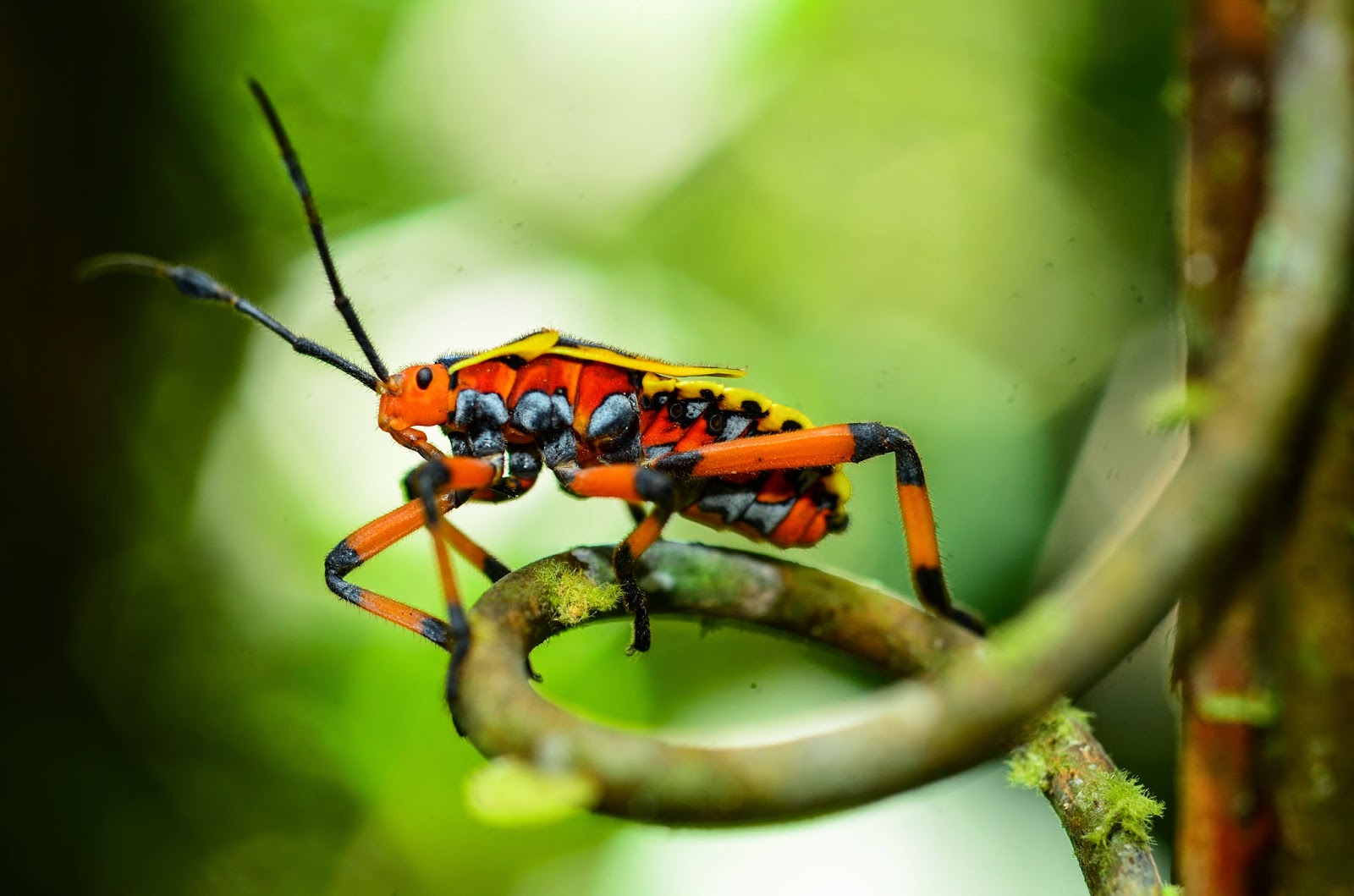
Since Peru I've been lucky enough to travel to some pretty spectacular places and invested a good chunk of the money I've made into new camera gear. I think the different perspectives I've gained with new lenses has made me a better photographer than the actual lenses themselves have... but thats certainly up for debate. My favourite addition to my kit has been a macro lens, which I've really only had a chance to use during a UBC biology field course that I took in Ecuador last summer (frog and insect shots). It'll probably stay in my bag for a little while yet as I'm mostly interested in shooting insects and frogs, but I'm thrilled for the day that it comes out.


The field course in Ecuador was mostly just an excuse to get back to South America, but it also gave me the extra 4 credits I needed to graduate this year. So I guess that happened. I graduated from university. I am no longer a student.... does that make me a biologist? Homeless? I'm not quite sure, but I would imagine that living in the bush for the next 14 months should give me enough time to figure it out. I'm too lazy to actually handwrite a journal, so stick with me as this is my chosen substitute. My thoughts should become a little more linear as interesting things start happening.


Back to the camera. I've also added a fisheye lens to my repertoire, which I'm using primarily for starscapes. Its also my wide-angle substitute... but I'm finding that landscapes during the day are a lot more difficult to make look nice than at night. The picture above is of a high mountain pass in Ecuador and the one below is of the night sky over Nickel Plate lake from a camping trip just outside of Penticton. 


If Ecuador wasn't enough of the tropics, during my Christmas break I was lucky enough to spend three weeks visiting Australia. I have to be honest, a lot of Australia that I saw didn't blow me away, but the three days I spent on Tasmania were spectacular. The shot below is of the land bridge connecting the north and south sides of Bruny Island, a small island on the southern tip of Tasmania. The southern half has some incredible birding, with the chance to see 13 of the 14 species of bird endemic to Tasmania (fourty-spotted pardalote, black-headed honeycreaper) and breeding populations of short-tailed shearwater and fairy penguin. 


While in Australia I figured out how to get my 500mm lens to work a little better, but the weight makes it impossible for me to ever really take travelling. I've replaced it with a 300mm lens, which has a little bit less range but also weighs much less and is incredibly sharp. The flame robin below is the last bird I shot with the 500mm so it looks like I'll have my work cut out for me on improving my bird photography. Though, now that I don't have to worry about writing papers and tests I suppose I should have a lot of time on my hands.


Other than a short (and free!) trip to Mexico that I didn't bring a camera for, that about sums up my last year in photography. I'm not sure how I've managed to see so many amazing places so early in my life, but I'm thrilled that work and family has given me the chance to travel so extensively. Now that I've graduated, I have had the chance to line up some pretty incredible field positions to keep my streak going. This friday (the 16th) I will be heading to Hilliard's bay campground on the Lesser Slave lake in south-central Alberta to work with a small species of songbird, the Canada Warbler. I'm working for a masters student at the University of Alberta on a project studying the effects of different logging strategies on the productivity of this endangered species of bird.

(Bunyip State Park, Australia - Great place to see Southern Emu Wren)

I'll be camping the whole time I'm there and that tent below will be my home in Alberta for the next 3 months. Patching up the holes is going to be priority number one to keep me alive and sane through bug season before I finish work at the beginning of August. After a week or two of rest in Vancouver I'll be heading to South America, where I will continue to live in a tent for another eleven months. I'll be working on the same project as I did last time in Peru, but this time based out of the low elevation research camp called Pantiacolla. Again, I will be studying birds from mid-August until late December and as before this is funded by a UBC undergraduate research grant as well as the Jankowski lab. As to what I'll be doing... its a little too far ahead to be sure but it should be either nest searching, bird banding or audio recording, if not a combination of each.

(Mount Granya State Park, Australia)

If all goes well following Peru I'll be heading to Colombia to work in Tatama National Park, again with the Jankowski lab. This field season is a little longer, projected to run from January until the end of June. It will leave me about a month between field seasons in South America, where I'm still trying to decide if I should come back home and see my friends and family or stay down there for an epic one-month trip birding my way through Peru, Ecuador and Colombia. Any thoughts on this are welcome. Regardless, there's a bunch of wild stuff in this blog's future. I've been promised some northern lights and incredible wildlife in northern Alberta and South America has never been anything but amazing.

(Mount Granya State Park, Australia)

I know my last attempt at blogging was a little lacklustre. It turns out that keeping a blog up to date while working six days a week in the rainforest is harder than I thought. I still have a bunch of half written posts and the accompanying pictures that I should really have put up here. Hell, I never even posted the story of that time I got hit by lightning. But, unfortunately, we're just going to have to move past all of that and you'll have to trust that my second attempt at blogging will be a bit more regular. So, I guess just check back here every so often and hopefully I'll actually have an update or two as I find out more about my work and where I'm going to be living. To everyone I've left behind, I miss you all!

- Torin

(Nickel Plate Lake)

* I'll do my best to make the writing a little more interesting in the future... just not much to say so far. 

Wednesday, November 21, 2012

Trocha Union


Alright, update time. Just back from Trocha Union, which was without a doubt the most breathtaking and awe-inspiring hike of my life. Let me start with a little background: the Trocha (trail) runs from Tres Cruces at 3600m elevation to Pilcopata at 700m elevation, though there is currently a gap where the Manu road crosses at 1700m. Built by the Incans, it has been in service for at least the last 400 years. From what I can gather, it was built as a highway for workers moving fruit from the lowlands on the east slope of the Andes to markets in the highlands of the west slope.  Currently the locals use it to bypass police checks when trying to move coca out of the foothills (around Pilcopata – more on that later).


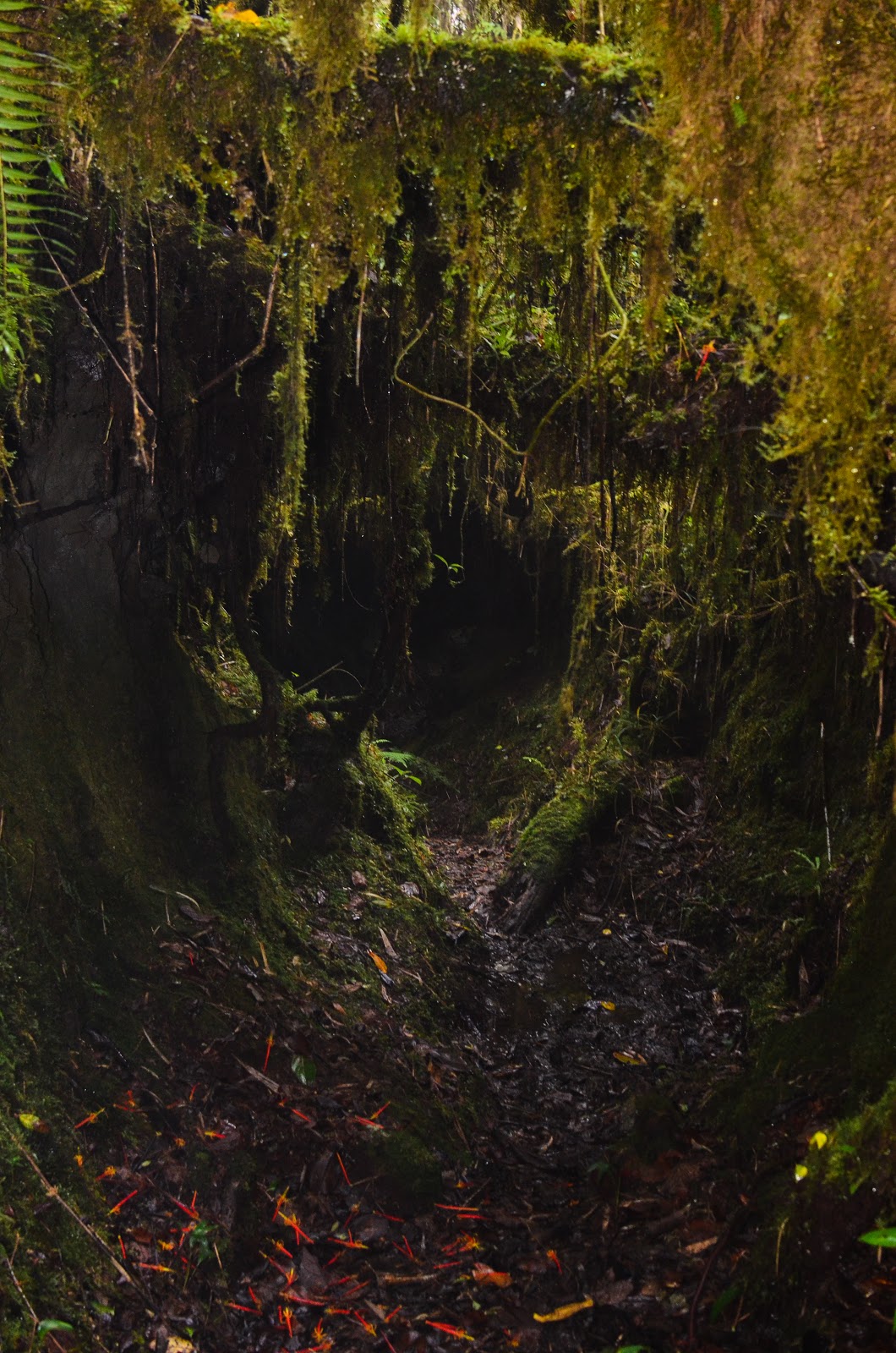
At around 12km long, the first part of Trocha Union could pass as an extreme day hike – though exclusively going in the downhill direction. With a drop of 1.9k in elevation before coming to the end of part 1, a good 90 percent of the trail is steep downhill. Going uphill, much of the cargo likely used to be transported by mule, which contributes to one of the coolest parts. Over the years, erosion and constant use have carved the trail deep into the mountain. Much of the walk is spent in trenches between 5 and 30 feet deep, with mud and rock walls just wide enough to walk through with a pack. Such a long history of continuous use has resulted in the trail literally passing under trees. Sections of trail merge into what can only be described as tunnels, made entirely out of roots. At their extreme, these tunnels can be hundreds of feet long and too dark to see in without a headlamp. As the trail slips slowly underground you find yourself standing at eye level with the forest floor.  


Though ridiculously cool, the tunnels are horribly frustrating. Given that the average height of most of the people using the tunnels must be close to 5 feet and they walk hunched over under the weight of large sacks, it comes as no surprise that almost nothing above 5 feet is cleared from the trail. This means constantly being hit in the face with vegetation, getting stuck on roots, and having to crawl through sections of tunnel with a heavy pack.


We began our hike at Tres Cruces, staying in a little research house at the top of the world (first picture) for the first night to get a good start early in the morning. If you’re lucky enough to have a clear day when starting your hike, you’re treated to a view of the entire Tono valley and part of the Kosnipata… from one of the highest points in the region all the way down into the lowlands. I’ve been told that Tres Cruces has the greatest sunrise in the world, and from my limited experience I would have to agree. Sitting at the top of the Andes with a 270 degree view as far as the eye can see, I can’t imagine many better views. Of course, I started the trip with condensation inside my camera lens, so managed to take very few pictures that actually even kind of worked.


Loaded up with camping gear, food for 7 days, and all of our research gear, the hike to our first campsite was grueling. Despite the overloaded packs and high altitude taking their toll, we arrived at our campsite (1km down in elevation) after about 3.5 hours of walking. Our supervisor, Jill Jankowski, had left at 3:30 in the morning to run point counts all the way down the trail. We found her waiting at our campsite.

(Team photo: Simon, Clifton, Me, Jill and Romulo) 

 After a quick lunch of ramen noodles we were back out clearing net lanes and setting up our banding station. We based banding station 1 out of our campsite, providing us access to 10 nets without having to hike every morning. Dinner was reheated ramen mush, as we had quickly realized that we were an entire day short on food, as well as having forgotten all of our powdered milk and oatmeal. As collecting water required an hour-long hike, we decided against washing dishes and simply tossed them out into the open to let the rain do its work. I went to bed cold, wet and hungry at about 6:30, despite wearing wool socks, fleece pants, long underwear, a fleece jacket and down vest.


At 11:00 I was rudely awoken by something big crashing into the side of my tent. Having had branches fall on me in Villa Carmen I immediately rolled to the other side of my tent and grabbed my headlamp. Looking outside my tent, however, I found no sign of fallen debris near the area I had cleared around my tent. I would later find out from Clifton that he had heard something large walking away immediately after the crash.  Startled and confused I lay in bed trying to drift back to sleep. 7 minutes later, something much smaller (small dog size) came sprinting past Clifton and Romulo’s tent, brushed past mine, and ran off into the distance. Perhaps a midnight hunt by a Cougar or an Andean bear?


The morning continued to provide surprises. Our soup pot lay on its side in the mud, claw and tooth marks gouged into the burnt bits at the bottom. My cup on the other hand, the one I had left a decent amount of ramen scraps on, had simply disappeared… Carried off in the night by some strange beast. Now, I suppose I shouldn’t be that surprised about animals raiding our camp, yet in an entire month in the lowlands we didn’t have a single incident with the wildlife. Night 2 and 3 the creature comes back. We decide it’s a Pacca… some sort of highland mammal like a big shaggy capybara. It snorts and snuffles around, making incredibly strange noises and breathing heavily. We manage to find our pan after the 3rd night, jammed between some roots where the Pacca got it stuck while trying to escape.

(A section of trail between station 1 and 2. The trocha runs down the entire ridge on the left)

After finishing our 3 days at station 1, we elected to set up the new station but remain at our original campsite. The second station was planned to cover a 2500m elevation plot, translating into setting up a couple kilometers down the trail and an hour long hike each way. However, with no water access anywhere except at our first station we decided against having to hike 2 hours with 20+ kg of water in favor of hiking with day packs out to our nets and returning for dinner. Station 2 was one of our slowest stations ever, second only to Station 1. With 26 birds at station 1 and about 40 at station 2, we were barely managing to pull in over 3 days what we normally caught in a day at Villa Carmen. That being said, the few birds we did catch more than made up for the slow periods with no birds. 


By day 2 of our second station we were essentially out of food. Having packed one day too little, we elected to hike out the night of day 3 rather than stay until the next morning. The night before we packed up our camp and headed to bed early. It was my turn to get water but I decided to bank on the fact that it had rained every night and hope that our tanks would fill up overnight. I woke up at 3:30 to find that it had, of course, not rained. Quickly packing my gear, I headed out in the opposite direction of our station to collect water. 20 minutes down a small game trail brought me to a tiny stream on the side of the mountain. How anybody had ever found it is beyond me... yet it is the only reliable source of water along the entire trail. The stream is so small that half of a pipe has been jammed into it so that the water flows along the pipe and then drops off a foot or two back into the stream. This is the only thing making it possible to even fill a waterbottle. 


Our last day went well, with this gorgeous jay getting snagged on our last net check of the station. We packed up our nets around 12, made a quick lunch and headed off down the trail around 2... leaving ourselves 4 hours of light for what could be between 3.5 and 5.5 hours of hiking (time estimates are generally varied and unreliable). Luckily we hiked it fast and made it to the end of the trail just before dark, leaving only a 2 hour walk down the road back to San Pedro. Our luck continued when a truck going to deliver stuff to San Pedro picked us up about half an hour in and dropped us off at camp. 

(How we catch birds - a Mist net)

So, coming back to the Coca trade. I wrote about it in one of my earlier posts but took it down at the advisement of my family. In retrospect, not a bad idea as I was terribly ill-informed. The real story (as far as I know) is a little more complex. Coca is a foothill crop. It is ideally grown in the hot, humid climate in the foothills of the Andes, just before you start hitting the real lowland rainforest. This makes the town of Pilcopata and the surrounding area (2 hours down the road from San Pedro) a great place for growing. From the lack of local produce and fruit (almost all comes by truck from Cuzco) it seems that the main crop grown in the area is indeed Coca. Now, this is not as big of an issue as you might assume. Coca is widely used in Peru for products other than Cocaine, from tea and liquor to simply chewing the leaves. It helps with altitude sickness, gives you energy and is just a generally all around useful herb. I drink coca tea any time I’m feeling under the weather and it seems to work on headaches, pain, stomach issues and pretty much everything else. Knowing this, the Peruvian government has set up a monopoly on the purchasing of Coca produced in the foothills. I’m sure I’m missing many of the intricacies but, simply put, all the coca in the lowlands is bought by the government at exorbitantly low prices, with no other legal option. However, once the Coca reaches the Andes and makes it onto the west slope it is fair game, and can be sold to anyone. As a result, many of the locals do their best to move their coca without government involvement.  The most hardcore walk up this trail, generally wearing sandals, in a single day.  


The majority of people are less hardcore and seem to take the bus or a truck. The police often set up checkpoints though and confiscate it. There seems to be no penalty for having more than your 1 bag limit... just that it gets taken. Anyway.. thats it for now. Trying to put up a post every day but I'm not really doing it in any sort of order, just most complete posts first. I'll try and organize them, but the website isn't letting me so far. 


Sunday, November 18, 2012

The End - A Brief Reflection


Sitting in a plane on my way home, I can’t help thinking to myself “is this really it?” Is it really over? I mean, it can’t be… can it? Vancouver, civilization, I’m not ready for you. I feel as if I have left the real world behind. Everything that I have has gone into the rainforest, and then a bit more. Without it, the world just doesn’t seem right. In fact, the only world I can imagine right now is the rainforest… there is nothing else.  

I think that’s what makes me love the rainforest so much. The isolation, the harsh conditions, the constant overwhelming sense of your own insignificance – it requires you to devote everything you have to simply survive. Those who aren’t willing to or able to throw everything they’ve got at it don’t last, as we saw many times throughout the season. It’s hard to explain how I feel about my time out here. The wilderness is just so enormous, so all-encompassing, so unforgiving that it demands complete commitment in all parts of your life. To cope I think you need to be able to reshape how you think, how you look at nature, who you are. Pulling a botfly out of someone’s back becomes a fun lunchtime activity. Nobody worries when you realize you’ve been having full conversations with yourself out loud. It’s reassuring to know that the rest of the team also occasionally talks to rocks, yells at the weather, or pulls the legs off of mosquitos one by one.  I am stopped every day by the overwhelming beauty of my home and the realization that I am just another tiny part of it. I think it’s helped me to realize what I really need, and to bring out an appreciation of all aspects of my life.  6 months after I first arrived and every day in the forest continues to bring me new things to look at with awe. I would give up everything to be back there right now. A break every couple of weeks to eat some cheese and meat and I would never even need to leave.

But.. alas, ‘tis the end. I hope that life will not just go back to normal, that this will remain a revolutionary point in my life. If you’ve ever considered working in the field, get out there as soon as you can. Just know that it’s going to be hard. There will be bugs. You will get tropical diseases. You will go a little bit insane. But if you can give it everything you’ve got, you’ll have the best time of your life. Ask any of my teammates and they will tell you the same.
So. For now, this is the end. Despite my lack of blog activity, I have been writing blog posts over the past 4 months that I will work on getting online. I hope I’ve done my experience even a tenth of the justice it deserves. Looking forward to seeing everyone back home. San Pedro and Mobile team, if you’re reading this, I love you guys. Keep killin it out there, I know you will.  We’re the only group to stay together, and it’s because of all of you! 

Friday, July 27, 2012

Yeah... i'll get back to this

(Where we do our shopping at the local market)


(Poison Dart frog found in a puddle on the side of the road)


(Dung beetle outside my tent)

(Peruvian Piedtail hummingbird eggs)


(Finger sized wasp)

(Green Jay post cicada destruction)

(Stacking frogs)

(Crazy lightning storm moving up the valley with moonrise)
(Damage done by foot tall monkeys trying to get our bananas)

(Back in the day we had time to cook... )

(Clouds moving through the station)

(Female Booted Racket-tail)


Hi all... i know it's been over a month... but i have to go. I just uploaded a ton of pictures, hopefully they work. I leave you to interpret them until i get more internet, which could be august.

Saturday, June 23, 2012

Still Alive

* Pictures to come. I’ve had to reduce image quality to between 9% and 25% of the originals to facilitate my 1.5kb/s max upload speed.     

Sometimes I ask myself, why is the skin coming off my feet? Is it because of the tropical fungus or because I wear the same socks and rubber boots everyday? The answer probably involves a little bit of both. Oh the joys of the rainforest. I had my 2nd shower today since arriving… I like to think it’s a step in the right direction. That being said, I don’t plan to make a habit of it. The showers are so damn cold… Vancouver ocean in the winter kind of cold. It’s just not for me.


Life in the middle of nowhere is, on a scale from 1 to great, pretty great. I spend almost all day being wowed by just about everything. The name “Cloud forest” was well chosen, as the clouds are constantly forming, disappearing, reforming and moving through the mountains. I have my camera taking pictures at 20 second intervals most of the day so I can watch the movement at high speed. Just between that and the night sky (not a whole lot of pollution out here) I think I would be content, then you throw in everything else and life is pretty swell.  For example: this bird (Orange-Eared Tanager- this picture doesn’t even begin to do it justice)

The birding from my tent is outstanding. I have yet to actually actively go birding, and yet, I usually manage to ID about 30 species of birds a day just while cooking from the platform (plus a bunch that I can’t ID). Huge mixed flocks of birds forage in the trees around our platform daily and the hummingbird garden just down the hill is always full of hummers – One of the most common being the booted racket-tail (look it up).  

The rest of the biodiversity is pretty incredible too. We stumbled across a troop of wooly monkeys a few days ago… infinitely better than Capuchins. As seems to be the norm with wild monkeys, they were not pleased to see us – jumping, howling and shaking branches before moving off deeper into the forest. Then you get to the insects… which seem to come in every shape and color that you could imagine as well as quite a few that you couldn’t.  At night the air lights up with a variety of different glowing bugs. They seem to travel in big swarms as you generally just see a hoard of florescent green sparks go flying across your vision, as if someone shot off a gun full of glow-in-the-dark buckshot.  We also attract an unbelievable amount of moths to the lamp we use in our work cabin. They’re often even crazier than the butterflies. 

My house is currently a large covered wooden platform supplied by the lodge. We’ve set up a kitchen (a table with a stove), dining room (a table with a candle) and even some chests and drawers (vegetable crates) to store food. 


Anything not nailed down continues to be stolen by the monkeys. Our place is continuously under siege. Yesterday I came home to find our entire lodge covered in banana peels and broken eggs. They were stored in an enormous wooden chest that the monkeys somehow broke into. It’s beyond reason… I mean, these monkeys are just over a foot tall and the chest is made of 2x4s with a lid that’s 5’ x 3’ of plywood and wooden boards. Manuel (our station manager) hit one with a shoe yesterday and knocked it off a tree (not very high… unfortunately it was fine). They generally send a scout or 2 ahead and then raid in force if they don’t see anyone. The key seems to be to hit the scout with a stick and scare it off…. That usually keeps em away for the day.

The schedule here is pretty relaxed, though night shifts are a task. We alternate nights, working in pairs to stay awake. The equipment we’ve been using is buggy at best and the computers crash pretty much nightly, losing any unsaved data. The result is generally a work night from about 5:30pm – 5:30am not including the mist-netting, which starts at 2:30pm.

So, what is it exactly that I do out here? Well, to begin with, I catch birds. This is done using mist nets, a series of super fine mesh panels that look somewhat like a badminton net. The birds can’t see them, fly into them and then get tangled in the netting. We come along, untangle them, and bring them back to our little hut at the lodge.

The goal of this stage of the project is to measure baseline oxygen consumption at a series of different temperatures. At about 5:30 we turn on all our equipment, put the birds in modified Tupperware containers with a thermometer and an input and output air tube, and put the whole thing in a mini-fridge. The fridge is used to control the temperature, with experiments conducted at 10, 20 and 30 degrees Celsius (recently we’ve started doing a fourth at 33 degrees). We’re supposed to do the first 3-4 sets of experiments on a group of 3 birds (the most that fit in the fridge) and then finish it off with one more set on 3 more birds. Most of the time though we don’t make it to the second set of birds before the sun rises due to a equipment failures and such. When there's enough light to see (around 6am) the people who weren’t working the night get up to finish processing the birds. This is just the typical banding procedure, measuring various body parts and taking feather samples, ectoparasites, etc.

Most of my free time so far has been spent catching up on sleep, washing dishes, arranging our house and cooking. It’s not so much that I’m essentially a maid… its just that I’m essentially a maid. When I’m not doing any of the above, I’m out walking around the area looking for anything cool… which is everything.  We found some enormous cat footprints today (this is a different today than the other todays in this post… I didn’t finish writing it in a day) while walking along the river. Either a huge male cougar (most likely at this elevation) or a Jaguar! Also some awesome frogs.

Fridays are our day off here, and that generally means we head into town. Getting there requires a 1.5 hour ride in the back of one of these.


We just wait on the road until one goes past and wave it down. On the way in they’re full of potatoes, chickens and people. The way back is a little different though. The local women (almost exclusively women) wait until dark before loading up the trucks with bags of coca leaves. Coca here is legal and used for tea and to chew.


The ride back is one of my favorite parts of going into town. There’s something about it that just ties the entire experience together. Lying with the locals in the dark in the back of an enormous cargo truck full of (possibly illegally cut as I think the entire park is off limits) lumber and potatoes is incredibly tranquil… despite being jostled around like you’re riding a bull. On a cloudless night the stars are impressive enough to keep me entranced for the entire ride.  Now I just need to find myself a piece of land so I never have to leave.

GODDAMIT. Its 5:30 am as I write this and our @&*#ing computer just rebooted, erasing our last 1.5 hours of data. The sun has started to come up and the other half of the team will be waking up in 20 minutes to take measurements of the birds and let them go. Unfortunately, that means that we won’t be finishing this round of data (33 degrees) or even starting the next batch of birds. On the bright side... I can go to sleep… until 8, when the sun warms up my tent too much to be inside. 

* The majority of this was written on the 19th


Monday, June 11, 2012

Goodbye.. maybe?

I´ve left the city... and with it, internet. When they said I´d have internet every night they weren´t lying per say... just not telling the full truth. It would probably take the entire night to load this website, so, new posts may be at an end from me. I´m currently an hour and a half from my home in the closest town with decent internet. My computer also seems to have died.. so I won´t be able to upload pictures. And of course, I dropped and partially broke my binoculars within 20 minutes of ariving... but really, who needs binoculars for bird research?

Home right now is the most incredible rainforest terrain I´ve ever seen. Go watch Avatar, then try and come to terms with the idea that my tent is set up in an even more awesome landscape. The ride in is unbelievable. The west slope of the Andes is dry and arid, with mostly succulents and other deserty plants. As we crossed over the top onto the east slope it changed almost immediately. Wet and cold, the cloud forest starts here. The trees are absolutely covered in epiphytes and moss and the clouds literally form around you. As we descended through the koƱipata valley the forest just got more and more insane. Having splurged on all you can eat Indian food the night before, my first experience with the rainforest was yelling at the truck driver to just pull over, diving over the side of the road and welcoming curry to the jungle. Despite feeling like death the whole 8 hour journey (sitting with 180 eggs on my lap the entire ride) it was still one of the more incredible experiences I´ve had. I don´t think you can really appreciate nature until you´ve driven through true rainforest. (The view from one of our mist nets)

The entire research team is currently staying on a platform provided by cock-of-the-rock lodge. This week has been crazy, as we´re trying to organize all the food and equipment needed for 2 months at 3 research stations as well as training everyone in all the research procedures. Not only that, but we have to keep our food protected from the goddamn monkeys. These capuchins are ugly, mean, and want to steal everything we have, our souls included. So far they´ve taken eggs, butter, fruit, vegetables and a whole bunch of our instant noodles.  (These things are actually pure evil. Hit one with shoe yesterday)

If they get the coffee though I may actually die.. considering that the days start at about 5:30 and if you´re running the experiments at night, end between 2 and 6 in the morning. With what we´ve got left though the food is actually pretty decent. Along with the 180 cans of tuna we brought we also found a ton of tuna hidden in a chest from last year... awesome right? Crap... cab´s here, gotta go.

As far as birding goes... this place is hard to imagine. From our platform I´ve already seen some of the most incredible birds of my life. Paradise, Yellow-Throated, Golden, Saffron-Crowned, Beryl-Spangled, Blue-Necked and Bay-Headed Tanagers are all present. Generally seen as part of the most incredible mixed flocks, it´s hard to get over the fact that these birds are even real. This is just one of the crazy birds we've caught - Cerulean Capped Manakin, a Peruvian endemic (many more insane bird pictures to come).

The butterflies too are just unreal. A decent pass time is watching as the tourists coming to the lodge get out of their trucks and immediately stare down at the ground... all the truck drivers piss there and the tourists go stand in puddles of piss and watch the butterflies that swarm for the salt. Who can blame them though?

I do apologize for the lack of pictures and shitty writing. I´m a little rushed since we need to stock up on fruit and vegetables to bring back to the research station. I also need a hammer and nails... I´m planning to build some canopy treeforts in my spare time. What else? Really.. this place is unbelievable. Just outstandingly beautiful. There was a guy staying here who shoots national geographic quality time-lapses (I mean.. he actually shoots for nat geo). Some of the stuff from around here is pretty much mindblowing. I´ll try and put something together for y´all. (Trying to get a time-lapse of this.. haven't had another clear night though) -

Alright, I must be off. If you want to talk send me an email or facebook message, I´m not sure how often i´ll be able to make it to the blog. I will write blog posts regardless of my internet status though and do my best to post them when I get a chance. Pictures will probably come in August.

* Update, I can't seem to upload pictures from here but I can send them to my mom. So if pictures show up here, you can thank her.

Some pictures from a night hike... I don't want to go back and change this post so you're going to have to deal with just pictures, no words.